Every hospital that's installed a 1.5T MRI in the last twenty years knows the figure by heart: roughly 1,500 to 2,000 liters of liquid helium, sealed inside a cryostat the size of a small car, topped off on a service schedule that never quite lines up with the budget cycle. A quench event — the emergency ramp-down of the magnet when superconductivity is lost — vents that helium through the quench pipe to the building exterior, triggers a precautionary evacuation of the scan room, and can leave the radiology department offline for weeks while the magnet warms, the cryogen is replenished, and the system is ramped back to field. In a compromised installation where the quench pipe fails, helium floods the room and displaces oxygen — the reason the evacuation protocol exists in the first place. That's the baseline. That's what every procurement committee signs up for when they order a conventional superconducting magnet.
So when vendors started shipping sealed systems that run on 0.7 to 7 liters of helium — amounts so small they're sealed inside the magnet at the factory and never touched again — the workflow architect in me wanted to see the receipts first.
The Engineering Shift: From Liquid Helium Baths to Sealed Micro-Cooling
The principle behind helium-free MRI isn't new physics; it's a packaging trick. Conventional high-field magnets immerse the superconducting wire in a bath of liquid helium at roughly 4 Kelvin (−269 °C). Modern cryocooler-equipped systems have reduced helium boil-off dramatically — some achieve near-zero boil-off — but the cryostat still requires periodic monitoring and occasional top-ups over the life of the system. Those top-ups are expensive, logistically annoying, and tied to a global helium supply chain that periodically tightens because helium is mostly a byproduct of natural gas extraction, not a manufactured commodity.
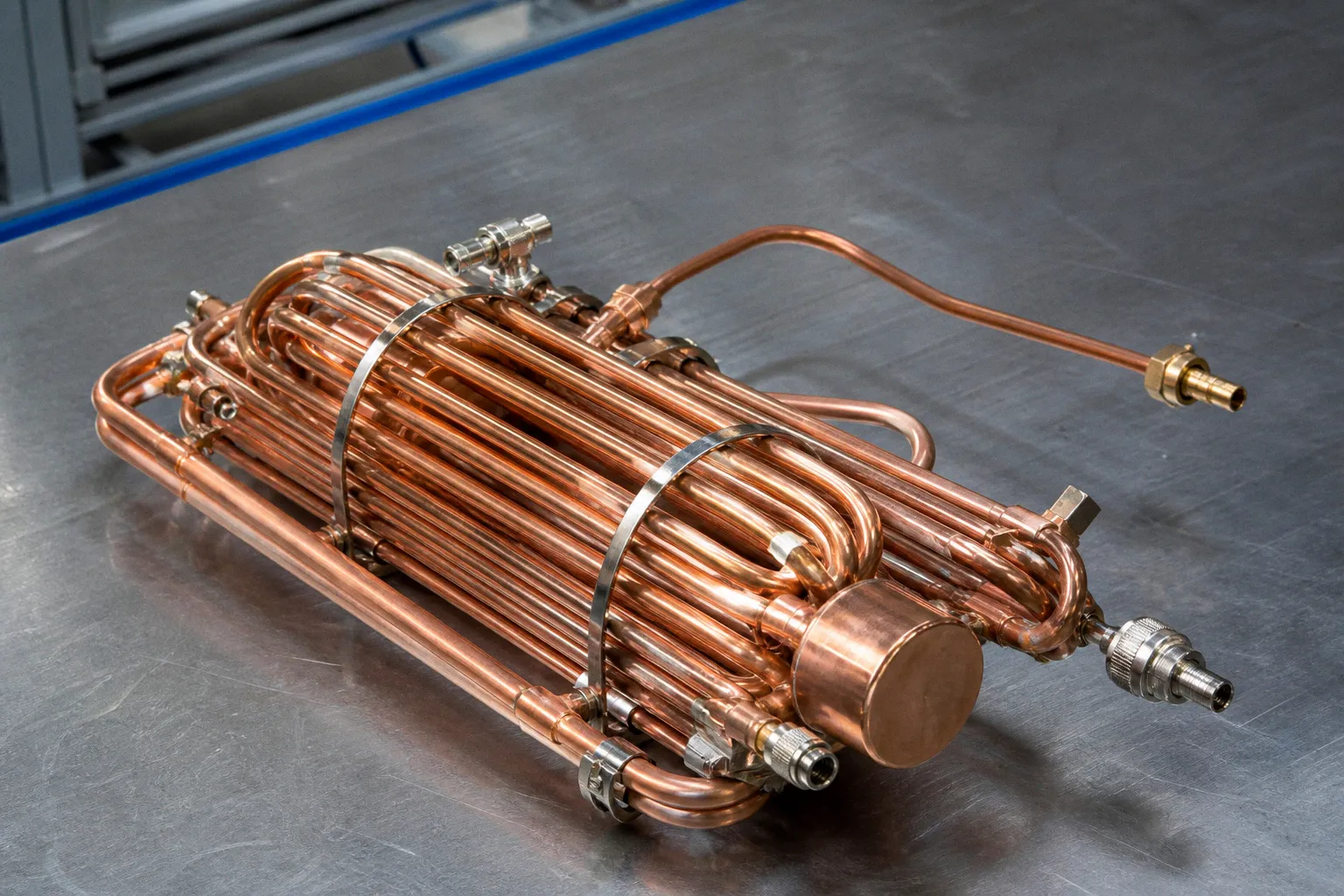
Sealed micro-cooling systems take a different route. Instead of bathing the coils, they cool them by conduction — the superconducting wire is thermally bonded to a cryocooler cold head, and a small sealed volume of helium (0.7 to 7 liters, depending on architecture) sits inside the cryostat as a thermal buffer. The cold head does the work; the helium never gets touched after manufacturing. Two vendors have productized this at scale: Philips with its BlueSeal line and Siemens Healthineers with the DryCool platform on the Magnetom Flow.
The Siemens Magnetom Flow, a 70 cm bore 1.5T system, received FDA clearance on January 8, 2026, and runs on 0.7 liters of liquid helium sealed inside the cryostat at production. Philips' BlueSeal has been in clinical deployment since 2018, with over 2,000 installations worldwide and reported savings exceeding 6 million liters of liquid helium. Both platforms are functionally helium-independent after installation — a property that changes siting math, refilling scheduling, and risk modeling in ways that procurement committees are still working through.
A 1.5T magnet that doesn't need a helium contract or a quench pipe — and that can sit on an upper floor without a major structural retrofit — is no longer a research curiosity. It's a procurement option, and the procurement calculus has shifted underneath us.
Infrastructure and Siting: Eliminating Quench Pipes and Reducing Weight
The second-order effects matter as much as the first-order ones. Conventional MRI siting is dominated by two constraints: the quench pipe and the magnet mass. The quench pipe is the engineered venting system that routes boiled-off helium gas from a quench event to the outside atmosphere, typically through three or four floors of the hospital. The magnet itself, including the cryostat and shielding, can weigh four to five metric tons on a 1.5T system — heavy enough that many upper-floor installations require structural reinforcement.
Sealed systems attack both constraints at once. Without a liquid helium bath that can vent, there's no need for a quench pipe — the magnet is designed so that even an emergency shutdown cannot release helium into the scan room. And because the cryogenic architecture is more compact, the magnet assembly itself is lighter: literature and vendor data put the reduction in the 1,700 to 2,050 kg range compared to conventional 1.5T systems.
What does that buy you in practice? Mobile MRI units, which were always structurally marginal because of magnet weight, become routine. Upper-floor installations in existing hospital footprints — spaces that previously required structural work or were ruled out entirely — become sitable with significantly reduced construction requirements. Vendor claims peg the installation-cost reduction at up to 70% when quench-pipe infrastructure isn't needed. That's not a brochure line; it's a specific line item in the capital budget that disappears.
The trade-off, and the workflow architect in me always looks for the trade-off, is that the cryocooler in a sealed system is a mechanical component with a finite service life. Cold heads need replacement on a multi-year cycle; the magnet itself is sealed. That's a different maintenance profile, not a maintenance-free one, and it needs to be priced into the lifecycle cost the same way helium refills were.
Clinical Performance at 1.5T and the 3.0T Frontier
Here's where the skepticism earns its keep. The 1.5T helium-free question was settled clinically in the 2018–2020 window — Philips' BlueSeal Ingenia Ambition has been in commercial clinical deployment for the better part of a decade, the installed base is north of 2,000 systems, and the literature on diagnostic image quality at 1.5T is mature. For routine neuro, spine, musculoskeletal, and abdominal work, sealed 1.5T performs at parity with conventional systems, because the underlying physics — signal-to-noise ratio at 1.5T, contrast behavior, sequence library — hasn't changed. What changed is the cryostat.
The 3.0T question is genuinely new. Philips unveiled the BlueSeal Horizon at RSNA 2025 as the first helium-free 3.0T platform, expanding dry-magnet architecture into high-field clinical imaging. That's an important milestone and a real engineering achievement, but it also means the first commercial 3.0T sealed systems are barely out of the wrapper. Multi-center clinical data comparing diagnostic accuracy, artifact behavior, and protocol portability against conventional 3.0T systems is, as of early 2026, limited. The installed base at 3.0T is small. Long-term reliability data for the cryocoolers under clinical duty cycle — the kind of data that takes five years to accumulate — does not yet exist in published form.
For a department weighing a 3.0T purchase today, the practical reading is this: the helium-free 1.5T case is closed and well-supported; the helium-free 3.0T case is promising but unproven. If your practice depends on advanced 3.0T applications — high-resolution neuroimaging, MR spectroscopy, fMRI, complex vascular work — the absence of a deep clinical track record on sealed 3.0T systems is a real consideration, not a marketing objection.
Conventional vs. Sealed MRI: A Practical Comparison
| Parameter | Conventional 1.5T | Sealed 1.5T (BlueSeal / DryCool) | Conventional 3.0T | Sealed 3.0T (BlueSeal Horizon) |
|---|---|---|---|---|
| Liquid helium volume | 1,500–2,000 L | 0.7–7 L, sealed at production | 1,500–2,000 L | Under 7 L, sealed at production |
| Quench pipe required | Yes | No | Yes | No |
| Magnet weight (vs. conventional 1.5T) | Baseline | 1,700–2,050 kg lighter | Heavier than 1.5T | Reduced, specific deltas still emerging |
| Clinical track record | Decades | Since 2018 (BlueSeal) / 2026 (Magnetom Flow) | Decades | Late 2025 introduction, limited multi-center data |
| AI reconstruction | Vendor-dependent | Standard (vendor-specific: Compressed SENSE & SmartSpeed or Deep Resolve) | Vendor-dependent | Standard at launch |
| Reported installation cost | Baseline | Up to 70% lower (no quench infrastructure) | Baseline | Lower (estimated, limited validation) |
| Reported energy consumption | Baseline | Up to 33% lower in literature | Baseline | Vendor projections, not yet peer-reviewed at scale |
The table compresses a complicated decision into cells, but the underlying point is that 1.5T sealed MRI is a known quantity and 3.0T sealed MRI is, for now, a bet on vendor projections plus emerging field experience.
AI Reconstruction as the Compensation Layer
Vendors have been quietly pairing helium-free hardware with AI reconstruction pipelines, and that pairing is not incidental — it's structural. Any sealed magnet architecture has thermal and packaging constraints that can reduce the available signal-to-noise ratio (SNR) headroom compared to a conventional cryostat. The way the industry has chosen to manage that trade-off is computationally: shorten the scan, average less, reconstruct more aggressively.
Philips ships its sealed platforms with Compressed SENSE and SmartSpeed; Siemens counters with Deep Resolve and its broader AI reconstruction family. The market has converged on deep-learning–augmented reconstruction as table stakes. Published figures for these pipelines report scan time reductions in the 45% to 50% range on routine protocols. A 6-minute brain sequence becomes roughly 3 minutes; a 4-minute knee becomes 2. The reconstruction buys back the time lost to reduced averaging, and it also produces images that radiologists, in most published comparisons, rate as diagnostically equivalent or improved relative to the longer conventional acquisitions.
The cynical reading: AI reconstruction is covering for a hardware trade-off. The pragmatic reading: AI reconstruction was going to land anyway because compressed sensing and deep learning have been eating acquisition time across the industry for years, and helium-free platforms are simply the first to be designed around reconstruction-first protocols from day one. Both readings have merit, and the workflow reality is that AI reconstruction has become baseline for clinical MRI at this point — any new magnet architecture that doesn't ship with it baked in is shipping a 2018 product in 2026.
The relevant question for a department is whether the AI reconstruction pipeline is validated on the protocols you actually run — not whether the vendor's whitepaper shows pretty images on a phantom. Run a head-to-head on your three highest-volume sequences before signing. Measure diagnostic confidence, not just scan time.
Vendor whitepapers will show you the 50% scan-time reduction on a healthy volunteer. Ask them to show it on a patient with a hip implant and a 22-breath-hold limit.
Operational Economics: What the Numbers Actually Say
Strip the marketing layer and the helium-free MRI value proposition rests on four numbers: helium cost, installation cost, energy cost, and weight. The first three are direct line items; the fourth is a siting-flexibility variable that converts into other savings (no structural work, no quench pipe, no rooftop HVAC upgrade).
On helium cost: the savings are real but variable, because helium pricing has been volatile for the better part of a decade. When global supply tightens, helium contracts get expensive fast; when supply is loose, the savings shrink. The sealed architecture insulates the hospital from that volatility entirely, which is a risk-management value as much as a cost value. Over a 10- to 15-year ownership cycle, hedging against helium price spikes is worth real money even in a soft market.
On installation cost: vendor data and published literature put the reduction at up to 70% for siting-heavy projects where the quench pipe and structural work dominate. For a ground-floor, new-build install with easy routing, the percentage is smaller. The savings scale with the difficulty of the existing site, which is why retrofit projects and mobile deployments see the biggest delta.
On energy cost: published figures for conduction-cooled MRI platforms report energy consumption reductions in the range of up to 33% compared to conventional cryogen-refilling systems. This is partly because the cold head is more efficient than continuous cryogen cooling, and partly because the system is smaller and dissipates less waste heat into the scan room — which in turn reduces HVAC load. Energy savings compound over a long ownership horizon in a way that procurement committees often underweight.
On weight: the 1,700 to 2,050 kg reduction is a siting enabler, not a direct cost saving. But siting enablers translate into deferred capital — the mobile MRI you can finally deploy without a custom trailer, the upper-floor scanner that doesn't need a new structural beam, the rural outreach program that becomes operationally viable.
What we don't yet have, and this is worth saying plainly, is comprehensive head-to-head lifecycle cost data for helium-free 3.0T over a 10-year ownership horizon. Vendor projections are optimistic by design; independent multi-center data will take half a decade to accumulate. Anyone buying a sealed 3.0T today is, to some degree, buying on a vendor projection backed by 1.5T field experience.
Where the Evidence Stops
The helium-free MRI story splits cleanly in two. At 1.5T, the technology is mature, the installed base is large, the clinical performance is well-documented, and the operational case is strong. Procurement committees that are still buying conventional 1.5T systems in 2026 are, frankly, paying for a helium contract and a quench pipe they don't need.
At 3.0T, the engineering is real but the evidence is thin. The BlueSeal Horizon is a credible platform, and Siemens has not yet announced a 3.0T counterpart but the technology path is obvious. What isn't obvious is how these systems will perform under five years of clinical duty cycle, how the cryocoolers will hold up against power-outage resilience questions, and whether the AI reconstruction compensation layer will remain transparent enough for radiologists to maintain diagnostic confidence on edge-case pathology.
For a department making a purchase decision today, the practical answer is: yes, helium-free MRI is ready for clinical use, with the caveat that you should buy the version with the evidence behind it. A sealed 1.5T platform is a safe, well-supported choice. A sealed 3.0T platform is an early-adopter bet — one that the physics says should work, and that the engineering says will work, but that the clinical literature hasn't yet confirmed across a full decade of multi-center use.
The helium era is ending. It just isn't ending evenly across field strengths, and the workflow architect's job is to know which is which before signing the purchase order.