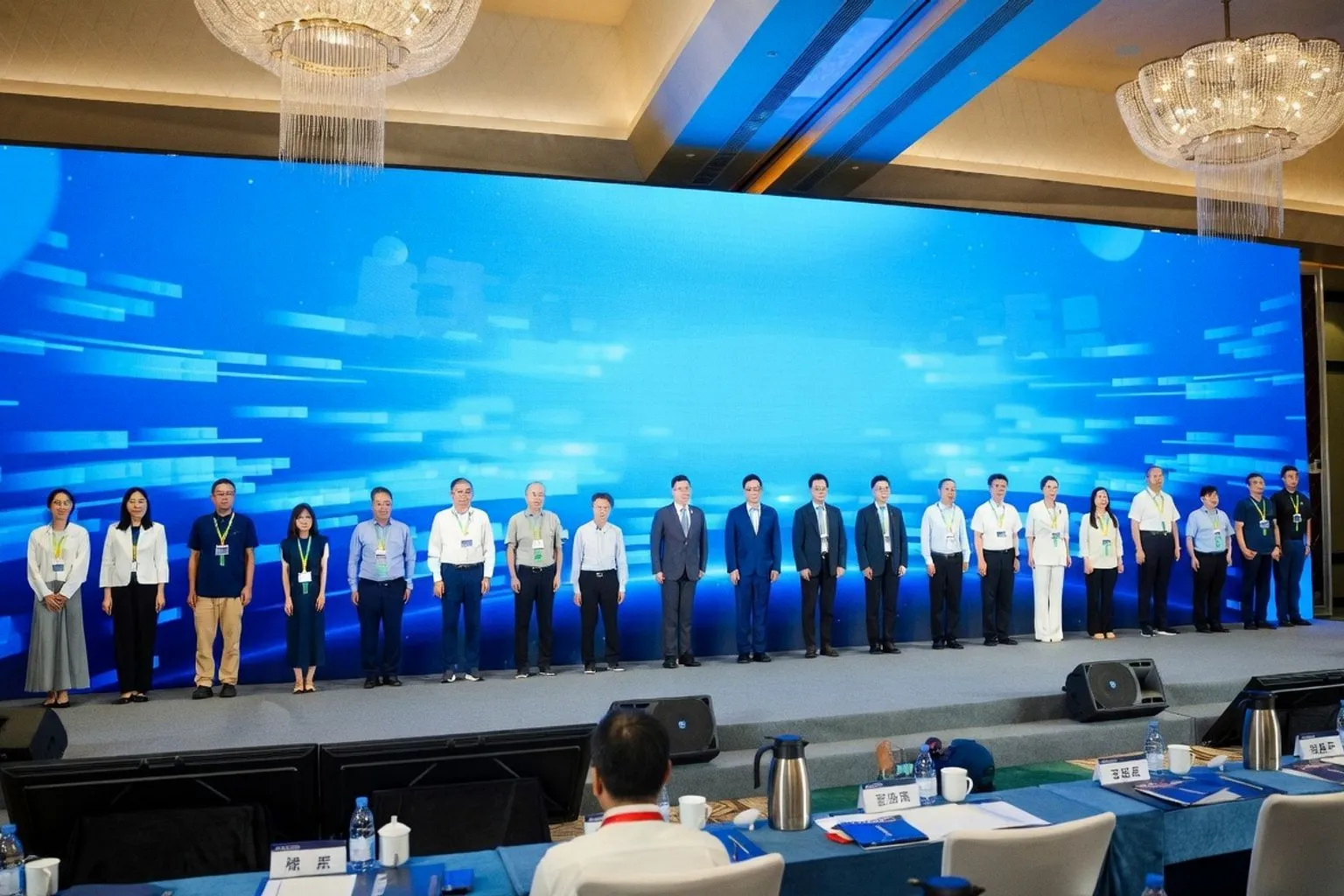
China's first conference dedicated to MRI-based brain-computer interfaces convened in Tianjin this week, according to the Global Times, marking a visible step in a national effort to bring structural imaging into the center of BCI engineering rather than treating it as an auxiliary readout. The meeting arrives as South China Morning Post reports that Chinese clinicians and policymakers are now scaling up brain-computer interface work following what the outlet describes as a world-first surgical milestone — a development worth tracing carefully, because the distance between a press headline and a validated clinical workflow is precisely the terrain our readership navigates daily.
Imaging as the substrate, not the accessory
What makes this conference notable for a neuroimaging-focused audience is its framing of the MRI scanner not as a diagnostic afterthought but as a core design element of the interface itself. Consider the implications: if structural and functional imaging data are treated as first-class inputs to BCI pipelines, then sequence selection, motion correction, spatial normalization, and longitudinal registration protocols begin to carry engineering weight they did not previously carry in purely electrophysiological systems. The shift allows us to think about voxel-level anatomy as part of a feedback loop rather than a pre-operative map, and it raises the stakes on every acquisition parameter a radiologist or MR physicist already takes seriously.
A separate headline circulating this week — from ababnews.com, attributing to Elon Musk the claim that MRI can accurately assess brain capacity and that the brain is a biological computer analogous to silicon-based systems — points to a real underlying tension in public discourse around these tools. The imaging modalities are genuinely powerful, but the leap from a contrast-weighted scan to a statement about cognitive capacity is exactly where clinical caution and longitudinal validation matter most, and where biomarkers can be over-interpreted long before the trajectory of evidence supports a strong claim.
What to watch in the coming months
Several threads are worth following without overreading them at this stage. Bioengineer.org's recent coverage of full-stack BCI designs suggests the field is converging toward integrated architectures where signal acquisition, decoding models, and feedback loops are co-designed rather than stitched together — and MRI-derived personalization maps are increasingly part of that integrated stack. For radiologists and neuroimaging software developers, the practical questions become concrete quite quickly: how BCI-specific acquisition protocols will intersect with existing clinical workflows, whether regulatory bodies will treat these systems as high-risk devices, and how longitudinal follow-up imaging will be standardized across centers so that subtle degradation or hardware-related artifact can be separated from genuine neural change.
What we do not yet have is the published program, an attendee list, or any peer-reviewed output from the Tianjin meeting itself — public reporting remains at the headline stage, and the unknowns list is longer than the confirmed one. That is not unusual for an early announcement, but it does mean the field's eventual judgment will rest on the data that follow, not on the framing of the launch. For now, the conference is best read as a directional signal: MRI is being pulled into the BCI conversation as infrastructure, and the practitioners who already own the imaging pipeline will be the ones shaping what that infrastructure actually looks like.