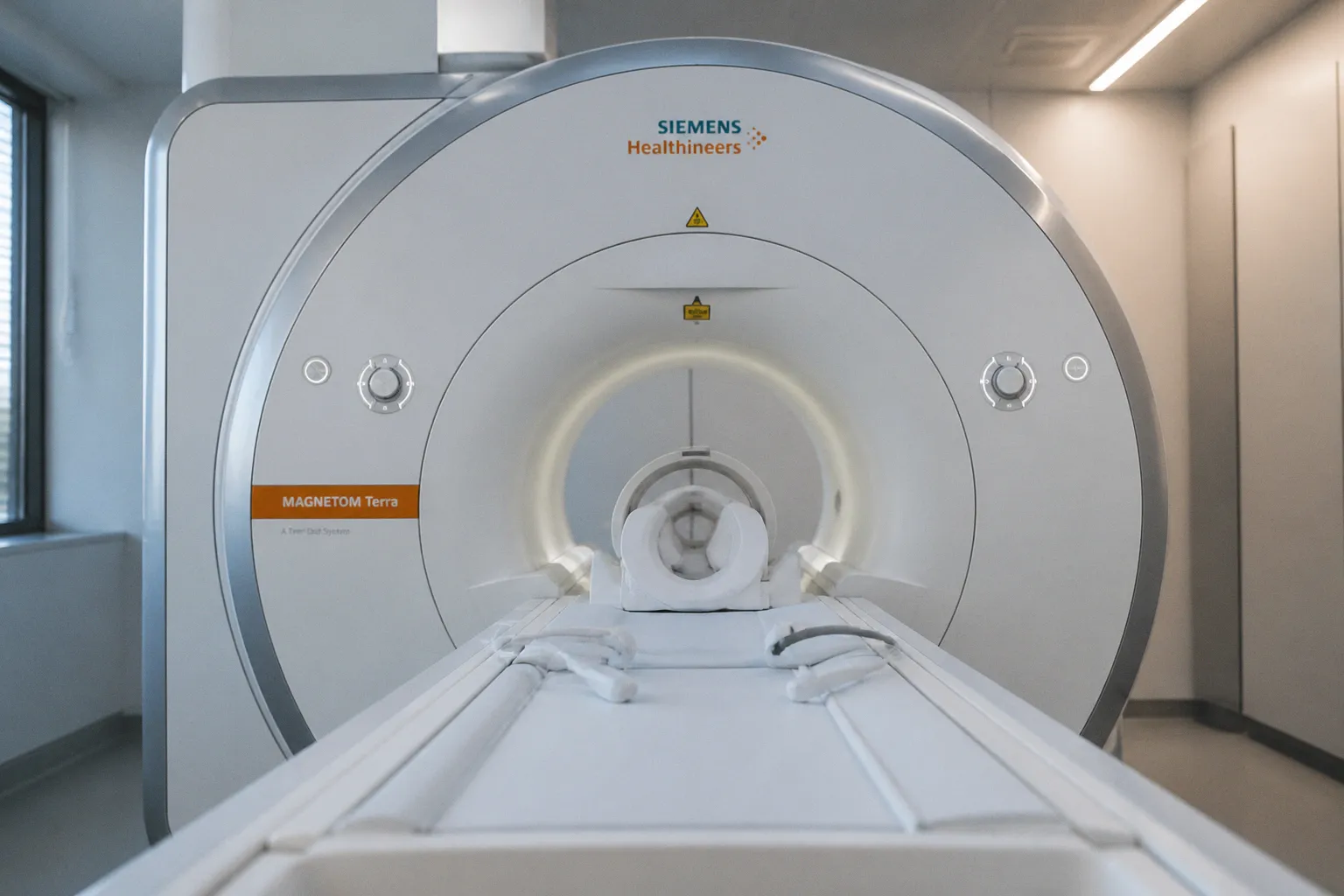
Consider the diagnostic challenge that has shadowed lithium therapy for decades: we know it works, we know it stabilises mood in bipolar disorder and offers neuroprotective promise in Alzheimer's disease, yet the mechanistic pathway by which it reshapes neural circuitry has remained largely opaque at the network level. Alzamend Neuro announced this week that its Phase 1/2A clinical trial data — employing 7-tesla resting-state functional MRI to map brain network changes following treatment with AL001, the company's patented ionic cocrystal formulation of lithium — has been accepted for poster presentation at Neuroscience 2026, the annual meeting of the Society for Neuroscience, scheduled for November 14–18 in Washington, DC. The abstract will appear in the Neuropsychiatric Disorders session on the final morning of the conference, and for those of us who track the slow convergence of high-field imaging and translational pharmacology, the details of the study design deserve a closer look.
What the Trial Actually Measured
The study employed a randomised crossover design with multiple six-subject cohorts, assigning healthy human participants to one of two treatment sequences: AL001 followed by conventional lithium carbonate, or the reverse order, with each dosing period lasting 14 days of three-times-daily administration and a 14-day washout separating the two arms. This is a small sample, and the crossover structure is important to note — it allows each participant to serve as their own control, which strengthens within-subject comparisons of network connectivity but limits the generalisability one can draw from six-person cohorts to broader patient populations. The imaging protocol relied on 7T resting-state fMRI, a modality that offers substantially higher signal-to-noise ratio and spatial resolution compared to the more ubiquitous 3T systems, enabling finer-grained detection of functional connectivity shifts across distributed brain networks. Dr. Ovidiu C. Andronesi, the study's principal investigator and Director of Multinuclear Magnetic Resonance Imaging at the Martinos Center for Biomedical Imaging at Massachusetts General Hospital, described resting-state fMRI as a window into how a treatment reshapes the brain's functional architecture over time, adding that these network-level findings complement the blood and tissue lithium level data already generated by the trial.
Why 7T Resting-State fMRI Matters Here
This shift toward ultra-high-field functional imaging in early-phase pharmacological trials is worth pausing over, because it signals a broader methodological trend that the neuroimaging community has been anticipating for some time. At 7 tesla, the BOLD signal carries meaningfully more information per voxel, which allows researchers to interrogate subcortical structures — hippocampal subfields, thalamic nuclei, amygdalar subdivisions — with a precision that 3T simply cannot match in a resting-state paradigm. For a compound like AL001, which is being positioned across Alzheimer's disease, bipolar disorder type 1, major depressive disorder, and post-traumatic stress disorder, the ability to detect subtle degradation or reorganisation of default-mode and salience network connectivity at this resolution could eventually help clinicians understand not just whether lithium engages the brain, but precisely which circuits are being modulated and on what trajectory. The principal investigator's emphasis on the longitudinal dimension — observing how architecture changes over time rather than capturing a single snapshot — is methodologically sound and aligns with what the field increasingly recognises as essential for linking imaging biomarkers to clinical outcomes.
What to Watch and What to Temper
The poster presentation, to be delivered by research assistant Shuqing Deng from Dr. Andronesi's laboratory, will report findings on treatment-associated changes in brain network connectivity among the healthy subjects enrolled in the completed Phase 1/2A trial. It is worth tempering expectations: these are healthy volunteers, not patients with bipolar disorder or Alzheimer's, and the sample size constrains the statistical power of any connectivity analysis. What the data can offer, however, is a carefully controlled proof-of-concept — evidence that AL001 produces detectable, measurable shifts in functional brain organisation at the network level, and that 7T resting-state fMRI is sensitive enough to capture those shifts within a 14-day treatment window. For the neuroimaging software and methodology community, the real value may lie less in the specific drug findings and more in the validation of the imaging pipeline itself: a 7T rs-fMRI protocol applied within a rigorous crossover pharmacological trial, with methodology developed at one of the world's leading MRI research centres. As the field moves toward precision neuromodulation and biomarker-guided treatment selection, datasets like this one — small but methodologically disciplined — lay the groundwork for the larger, patient-population studies that will ultimately determine whether network-level imaging can meaningfully inform clinical decision-making in lithium therapy.