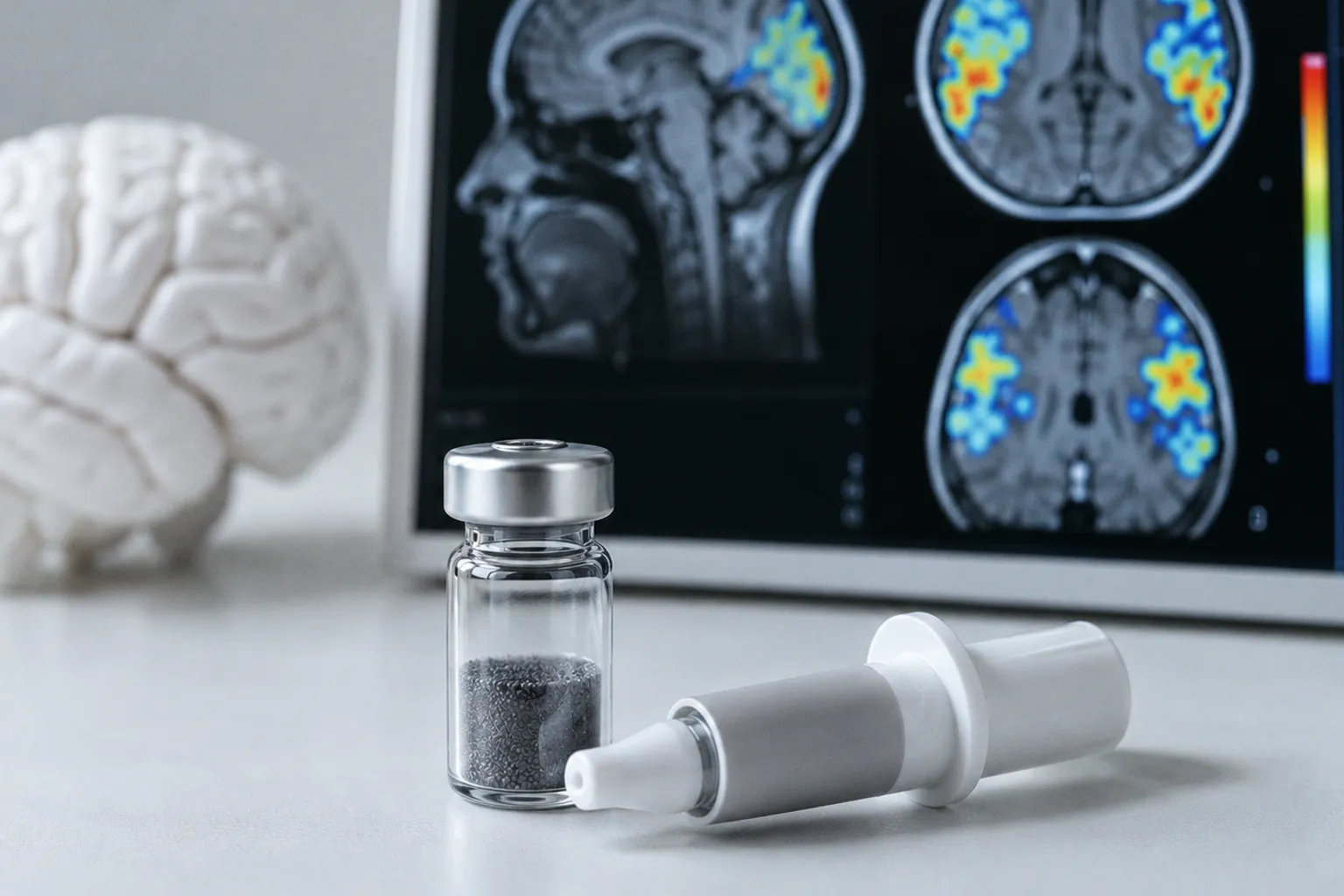
The news that AI pioneer Ray Kurzweil has joined neurotechnology startup Subsense might initially read as another headline from the fast-moving frontier of brain-computer interfaces, but for those of us mapping neural pathways, it represents a fundamental, and profoundly interesting, divergence in methodology. According to a recent report, Kurzweil’s move positions him with a company pursuing an alternative to surgically implanted electrodes—one that involves the inhalation of charged nanoparticles to create a non-invasive neural interface, a concept that shifts the entire burden of complexity from neurosurgery to nanomaterial and olfactory biology.
A Different Route Through the Blood-Brain Barrier
The core of Subsense's proposed approach, as detailed in its public disclosures, is a nasal spray designed to facilitate the delivery of nanoparticles to the brain. These particles are intended to travel via the olfactory nerve—the sensory pathway for smell—bypassing the systemic circulation and the formidable blood-brain barrier that has challenged drug delivery for decades. Once positioned near neurons, the nanoparticles would interact with magnetic fields generated by an external headset, theoretically allowing for the stimulation or reading of neural activity without a single incision. For our field, this raises immediate and layered questions. The long-term biocompatibility, clearance mechanisms, and precise spatial resolution of such a system remain open chapters in the story. How do we image and track the distribution and fate of these charged particles with existing MRI sequences? What artifacts might they produce, and how would we distinguish their signal from underlying pathology in longitudinal studies? The leap from concept to clinic is paved with these kinds of translational hurdles.
The Specter of Translation and the Shadow of Existing Interfaces
Kurzweil’s involvement underscores the high-profile convergence of AI and neuroscience, a synergy our readers navigate daily in algorithmic development. His stated belief in the “convergence of AI, nanotechnology and neuroscience” highlights a future where data acquisition is non-surgical and potentially more accessible. Yet, consider the clinical implications against the backdrop of established, surgically implanted BCIs like those from Neuralink. Those devices, while invasive, offer a known and characterizable risk-benefit profile, with direct cortical access that provides high-fidelity, real-time data streams crucial for decoding complex motor or speech intentions. A nanoparticle-based system, hypothetically targeting more distributed or subcortical regions, might offer different signal characteristics entirely. The startup’s reported initial targets—neurological diseases such as ALS and Parkinson’s—are ones where our imaging protocols are already nuanced and where even subtle shifts in neural circuitry or dopaminergic pathways demand exquisite sensitivity. The promise of a non-surgical interface is tantalizing, but it cannot be divorced from the rigorous validation metrics our field requires: specificity, sensitivity, and, above all, safety over a patient’s entire disease trajectory.
What This Means for the Neuroimaging Pipeline
As the report notes, Subsense has begun animal testing and is some time away from human trials, having secured $27 million in funding. This is the stage where the foundational work of neuroimaging must begin in earnest. Long before any human trial is contemplated, the preclinical pipeline will require advanced imaging to map nanoparticle biodistribution, assess neuroinflammatory responses, and correlate any induced magnetic field effects with actual neural activity—a tall order for even the most sophisticated micro-MRI setups. For the developers and researchers in our community, this represents both a challenge and an opportunity. The challenge lies in developing new acquisition protocols and analysis tools to interrogate a fundamentally novel kind of neural interface. The opportunity is to be involved at the ground floor, to ensure that the metrics of success are defined by clinical reality and not just technological possibility. This shift allows us to reimagine the BCI not as a foreign object to be integrated, but as a transient, modifiable component within the neural environment—a concept that will require our most careful, patient, and longitudinal investigation.