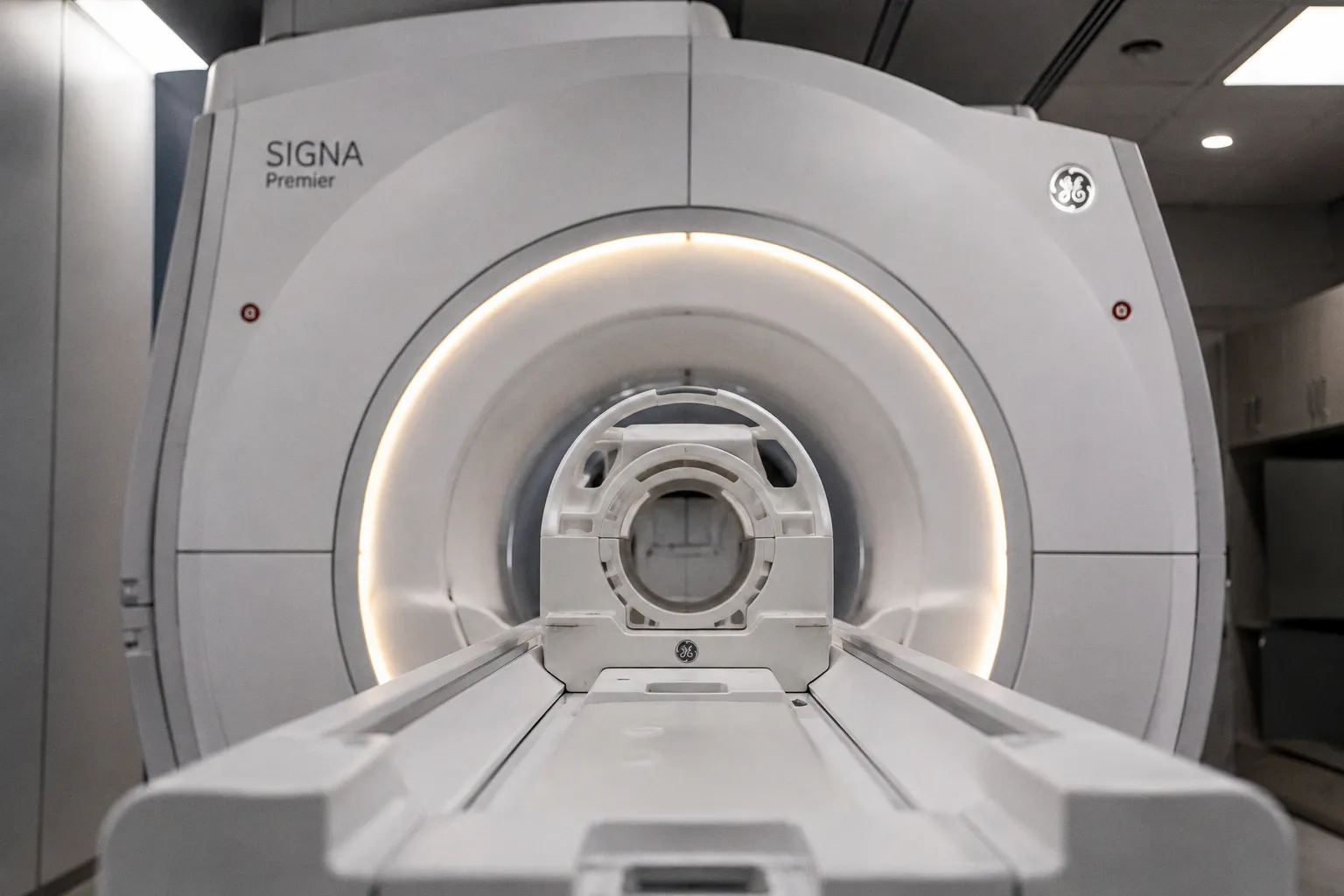
A new deep learning architecture from Tongji University and the University of Toyama targets a documented constraint in MRI segmentation: the persistent trade-off between global contextual modeling and precise boundary delineation. According to News-Medical, the V-UNet model is engineered to capture global contextual relations while refining boundary delineation across MRI and multimodal clinical datasets. For software teams building clinical pipelines, the question is not novelty — it is whether the architecture mathematically constrains the failure modes that currently limit competing approaches.
The engineering problem V-UNet constrains
Convolutional encoder-decoder networks tolerate this trade-off poorly. Expanding the receptive field to capture global context degrades spatial precision; aggressive downsampling yields coarse boundaries that fail at tissue interfaces where small segmentation errors propagate into volumetric quantification, tractography masks, and atrophy metrics. Attention-based hybrids attempt the inverse path — global context at higher resolution — but quadratic scaling constrains volumetric MRI inputs to patch-based inference with its own boundary artifacts. The V-UNet design, according to the source, addresses this dual failure mode. The specific architectural mechanism remains undisclosed in available reporting, and any quantitative claims should be treated as preliminary until peer-reviewed benchmarks and code release.
What the multimodal claim tolerates
The architecture is positioned as multimodal-compatible across MRI and other clinical imaging datasets. The source material indicates the model is not hard-coded to a single pulse sequence or contrast regime, which is the relevant engineering property: a segmentation model that fails on non-canonical input degrades an entire multimodal workflow. For neuroscience applications — where structural, diffusion, and functional volumes must coexist in a single atlas — this is the constraint that determines deployability.
The clinical pipeline context it lands in
The release coincides with a separate commercial signal. BioPharma APAC reports that GE HealthCare and Tucker Medical have announced a partnership in Singapore deploying deep learning MRI reconstruction and accelerated acquisition technologies — including AIR Recon DL and Sonic DL — for clinical research and precision diagnostics. Reconstruction and segmentation occupy the same pipeline layer: k-space undersampling and post-acquisition delineation are both mathematical inversions under deep learning priors, and their failure modes overlap. A model that yields sharp boundaries on heavily undersampled data has more practical value than one that requires pristine inputs.
The V-UNet release remains a research-stage claim. A separate item on EurekAlert! — the Lumosity Research Platform (IMAGE) — appears in the same news cluster, but the available material offers no technical detail. That is the adjacent signal to track.