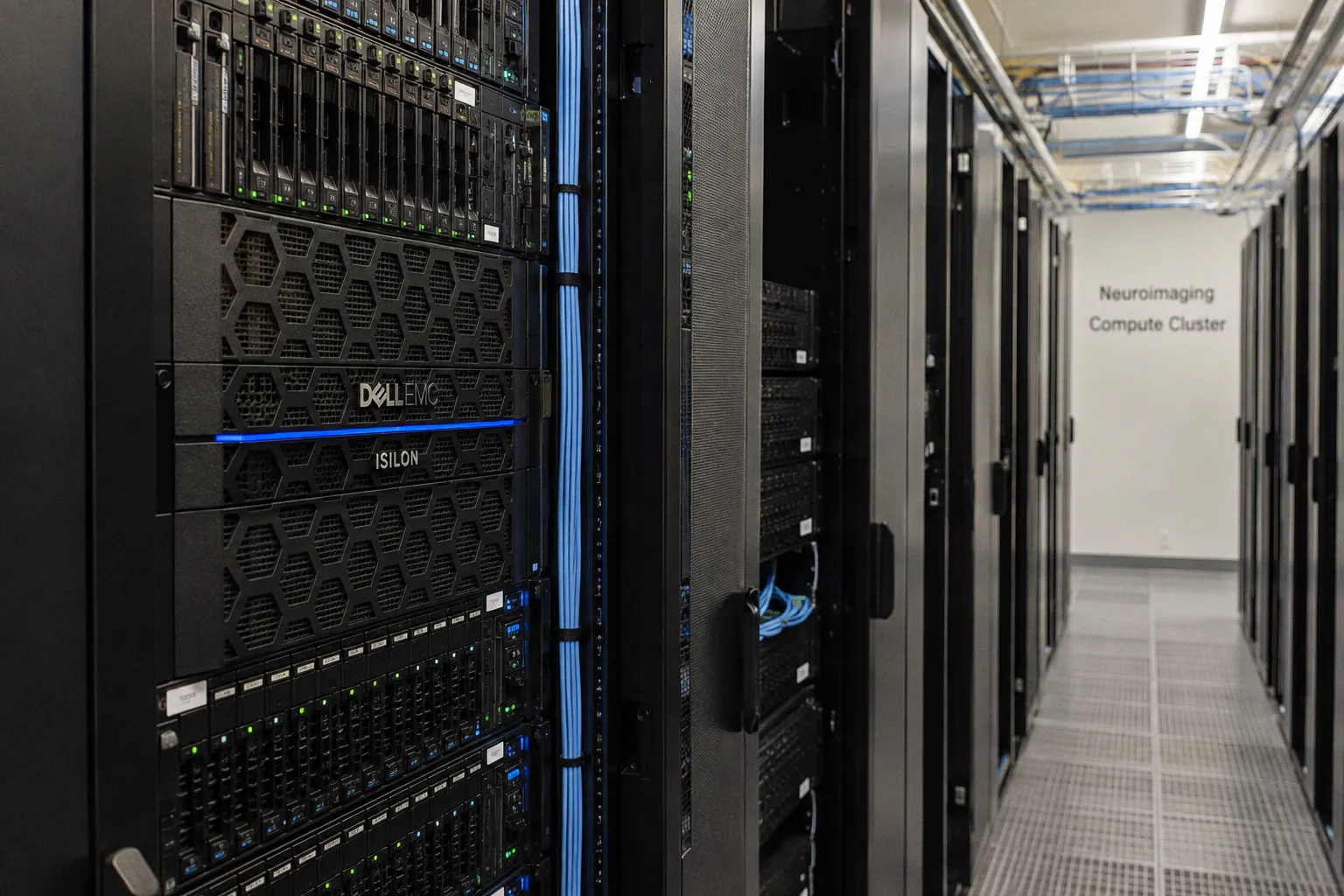
A team from Stanford University School of Medicine has published a detailed operational protocol for high-throughput fMRI and MRI acquisition in psychiatric clinical trials, drawing on lessons accumulated across thousands of scans in clinically diverse cohorts. According to Frontiers, the open-access framework addresses a gap that has long frustrated translational neuroimaging programs: not the elegance of the analytical pipeline or the precision of any single acquisition, but the unglamorous, day-to-day machinery that determines whether a dataset can be trusted at scale.
The paper, authored by researchers across the Department of Radiological Sciences and the Department of Psychiatry and Behavioral Sciences, walks readers through the entire spine of a clinical imaging workflow — subject recruitment and consent, meticulous equipment calibration, real-time quality control of incoming scans, and the standardized documentation (standard operating procedures, hardware and software logs) that make any of it reproducible. The emphasis throughout sits on functional MRI, which carries its own peculiar sensitivities to motion, susceptibility artifact, and physiological noise, particularly in psychiatric populations where these confounds tend to amplify rather than quiet down.
Why operational protocol matters at this scale
What makes the Stanford framework distinctive, the authors suggest, is its provenance. Rather than codifying prescriptive guidelines from above, the recommendations emerge from years of iterative troubleshooting during real clinical research — the kind of acquired knowledge that lives in a lab's collective muscle memory and rarely survives a transition between teams or institutions. This shift allows us, as the team frames it, to move from idiosyncratic excellence toward something teachable, where a new site can inherit a working pipeline rather than rediscover each pitfall on its own trajectory.
For software engineers building the next generation of acquisition and quality-control tooling, the protocol also functions as an implicit specification document. Real-time QC, in particular, is described not as an abstract aspiration but as a concrete workflow with checkpoints: what is monitored during a session, how drift is caught, when a scan is repeated, and how the decision is logged for downstream auditing. Consider the implications for a research-grade scanner console — the dashboard is no longer a passive display but an active gatekeeper.
A wider current in translational neuroimaging
The Stanford publication lands alongside a cluster of recent work that points in a similar direction. A review summarized via EurekAlert! traces a century of deep brain stimulation and maps DBS targets across sixteen neurological and psychiatric indications, calling for biomarker-guided, adaptive neuromodulation measured against meaningful patient outcomes rather than novelty alone. A Nature piece on neuromodulation for restoring and amplifying brain function, and an eHealth Magazine report describing a human brain-to-brain interface demonstration, both gesture at the same underlying question: as our interventional tools become more capable, the acquisition and validation infrastructure around them must become more disciplined, not less.
For radiologists, MR scientists, and developers building the pipelines behind these studies, the practical takeaway is straightforward. The bottleneck in psychiatric neuroimaging is no longer scanner hardware or statistical methodology in isolation; it is the operational layer — the SOPs, the calibration routines, the QC dashboards, the consent workflows — that determines whether a thousand-scan dataset becomes a scientific resource or a cautionary tale. Watch for adoption, and watch for the audit trails that will, over time, separate the two.