When a Stablecoin Company Starts Decoding Speech from Electrodes
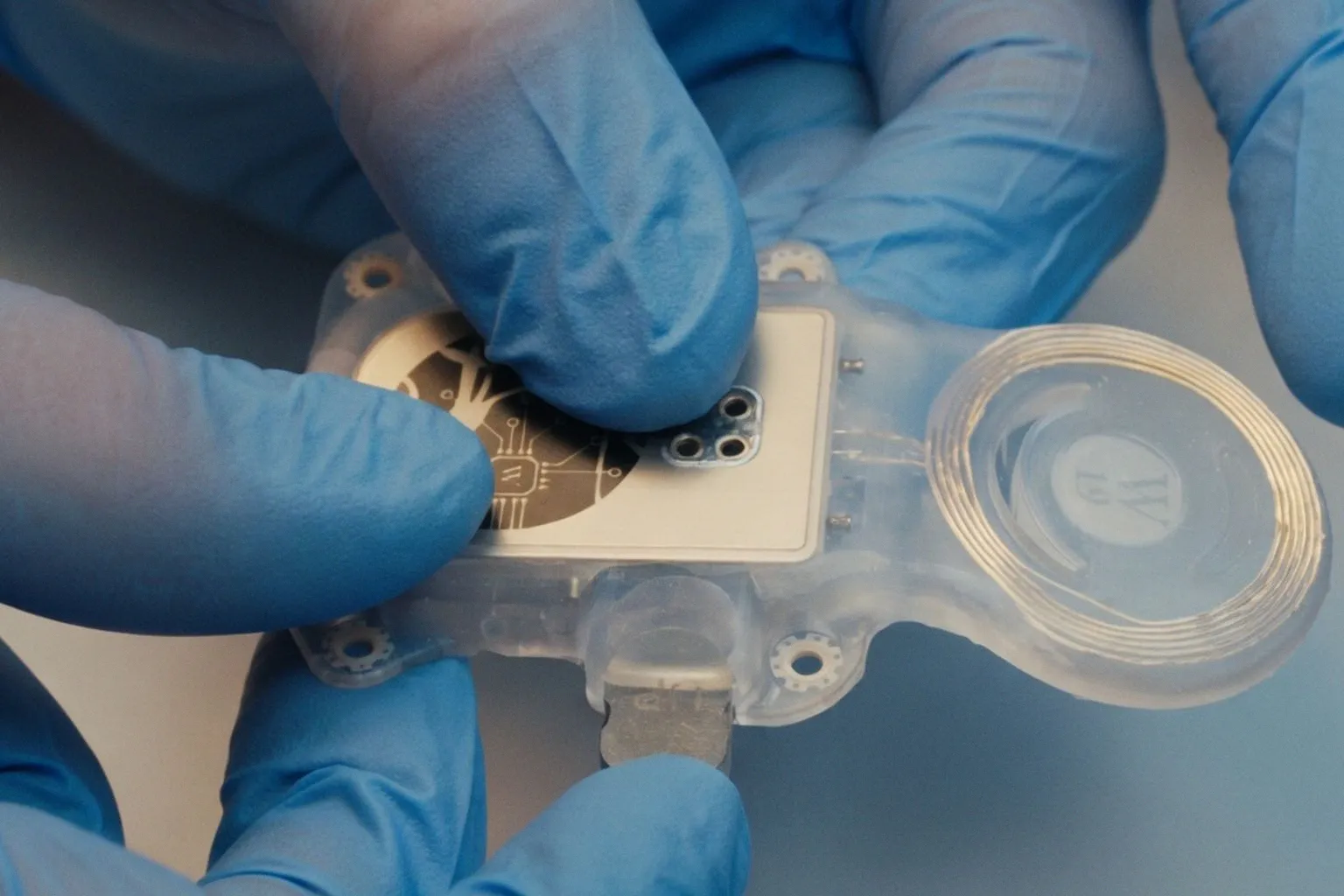
Tether — best known in fintech circles for its USDT stablecoin — has unveiled BrainWhisperer, a brain-to-text decoding framework that reportedly achieved 98.3 percent accuracy in translating intracranial neural signals into written language, according to a sponsored feature published through TechCrunch's Brand Studio. The system, part of Tether Evo's broader "Brain OS" initiative, ranked fourth out of 466 entries in the Brain-to-Text '25 Kaggle Competition with a word error rate of 1.78 percent, falling just 0.25 percentage points short of the top spot. For those of us tracking the translational arc of intracortical speech decoding, the arrival of a well-resourced private player with competitive benchmarking results warrants careful attention — and equally careful scrutiny of what these numbers actually represent in a clinical trajectory.
Adapting Whisper for Intracranial Signals
Consider the architectural choice at the heart of BrainWhisperer: the system builds on OpenAI's Whisper, an automatic speech recognition model originally designed for acoustic waveforms, and repurposes it to process tokenized neural signals recorded from intracortical brain-computer interface implants. A LoRA — Low-Rank Adaptation — fine-tuning layer sits atop the base model, trained to progressively reduce word error rates across separate trial sessions. The pipeline itself is a multi-stage ensemble of five models, each trained on three established brain-to-text decoding datasets (Willet, Card, and Kunz), optimized with Adam and a 100-epoch cosine learning rate schedule. A Weighted Finite-State Transducer then converts the phoneme sequences each model generates into candidate transcriptions.
This shift allows us to see a broader pattern in the field: the repurposing of large pretrained speech models for neural decoding is gaining traction precisely because the phonemic structure of language provides a shared representational bridge between acoustic and neural domains. What remains less clear from the available reporting is the nature of the intracranial recordings themselves — electrode type, cortical regions sampled, and the number and clinical profile of the research subjects whose signals produced that 98.3 percent figure. Without those details, the accuracy claim, while impressive on paper, resists the kind of longitudinal clinical interpretation that would tell us whether this architecture generalizes beyond a controlled experimental paradigm.
Benchmarking in Context
The Kaggle Brain-to-Text competition provides a standardized arena for comparing decoding models, and a fourth-place finish with a 1.78 percent WER is a meaningful signal of algorithmic competence. Yet it is worth remembering that competition benchmarks and bedside performance inhabit different biological realities. A model that excels at decoding rehearsed sentences from a constrained dataset may behave differently when confronted with the spontaneous, error-laden, emotionally inflected speech that characterizes everyday communication — the very domain where a person with severe paralysis would most benefit from reliable decoding.
The broader landscape is moving in parallel directions. Ability Neurotech, for instance, is developing an optical BCI that uses infrared light to record neural signals from the brain's surface, with a European clinical trial reportedly approaching. These contrasting approaches — intracortical electrode arrays versus surface optical recording — reflect a fundamental tension in the field between signal resolution and surgical invasiveness, and the coming years of clinical data will determine which trade-offs prove sustainable for long-term human use.
What to Watch — and What Not to Overclaim
Tether's stated ambition extends beyond BrainWhisperer alone: the company describes Brain OS as an open-source brain operative system built on its QVAC AI platform, designed to run on-device for privacy and to connect with personal BCIs and wearables. The vision is expansive — enhancing cognitive expressiveness by orders of magnitude — and the framing draws explicitly on social disability theory, positioning enablement rather than cure as the guiding principle.
For researchers and engineers working at the neuroimaging-software interface, the actionable takeaway is narrower and more concrete: here is a well-funded team applying modern ASR architectures to intracortical data and submitting to open benchmarking. That transparency is welcome. What the field still needs, however, is peer-reviewed validation with detailed demographic and implant data, longitudinal error-rate trajectories across sessions and months, and open access to the decoding pipeline itself — not just competition rankings. The gap between a sponsored feature and a clinical evidence base is precisely where translational neuroscience must insist on rigor, even when the early numbers look compelling.