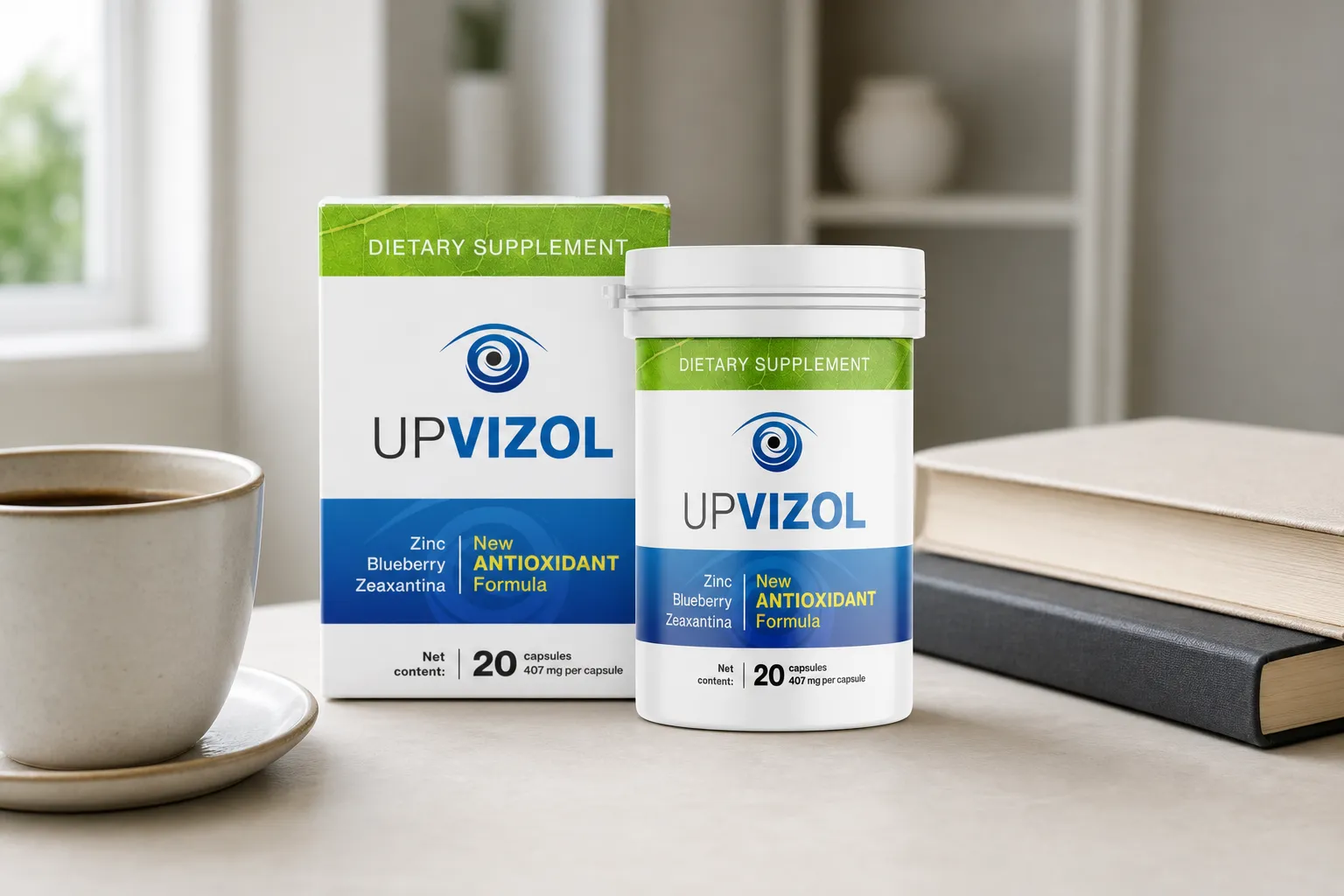
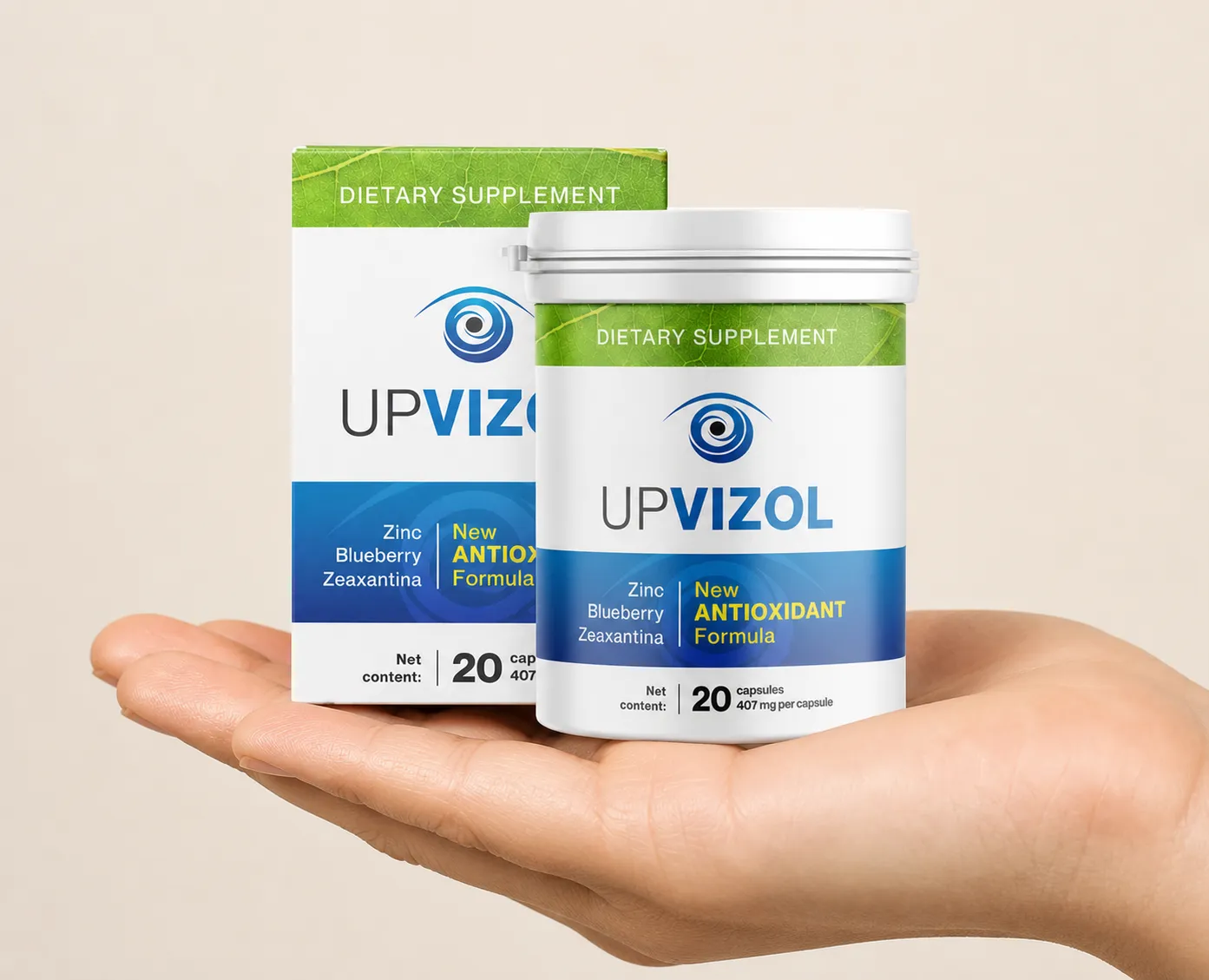
UpVizol is a food supplement for the eyesight category, presented in capsule form. It is aimed at people interested in nutritional support for visual comfort and eyesight, while the manufacturer states that the product is intended to increase visual sharpness and clarity, relieve eye tiredness, and help prevent myopia, astigmatism, and other conditions.
Strengths
- The product has a clearly stated category and capsule format.
- The manufacturer provides a named ingredient list rather than leaving the composition completely unspecified.
- The page displays a price of 49 USD.
- The formula includes ingredients commonly discussed in general nutrition and eye-health contexts, such as lutein and zeaxanthin.
Weaknesses
- Ingredient amounts and serving size are not disclosed.
- The efficacy claims come from the manufacturer, and independent study information for this product is not disclosed.
- The specific botanical identity and role of the listed munya extract are unclear.
- The product is a food supplement, not a medicine, and cannot replace an eye examination or prescribed treatment.
«According to the manufacturer, UpVizol increases visual sharpness and clarity.» — Manufacturer statement
Our assessment
UpVizol's stated promises are broad. According to the manufacturer, it can increase visual sharpness and clarity, relieve eye tiredness, and help prevent myopia, astigmatism, and other conditions. Those are substantial claims, especially where refractive errors or eye diseases are concerned. Without disclosed ingredient amounts, clinical data on the finished product, or independent testing information, the realistic interpretation is that this is a supplement marketed for eyesight support rather than a proven treatment for impaired vision.
Several listed ingredients are at least familiar in general discussions of nutrition and eye health. Lutein and zeaxanthin are carotenoids associated with the macular region of the eye, while carrot-derived compounds are discussed in relation to vitamin A nutrition. Bilberry, chamomile, moringa, and chia are also used in broader nutrition or traditional-health contexts. However, the presence of these ingredients does not establish that the particular combination improves sight, corrects refractive errors, or prevents disease. The quantities and extract specifications are not disclosed, which makes the formula difficult to assess in detail.
A supplement cannot replace glasses, contact lenses, an eye examination, or treatment prescribed for a diagnosed condition. Myopia, astigmatism, persistent blurred vision, eye pain, flashes, or sudden changes in sight require appropriate professional assessment rather than reliance on a capsule. UpVizol should therefore be viewed as an optional supplement product, not as a medical solution.
How to use it
The recommended intake is not stated in the available product information. Follow the manufacturer's package insert, and do not assume that taking more capsules will produce a better result.
Background: understanding Eyesight
Eyesight depends on how light is focused by the cornea and lens and then processed by the retina, optic nerve, and brain. Myopia occurs when the eye focuses distant images in front of the retina, while astigmatism results from irregular curvature that causes light to focus unevenly. These refractive problems are commonly managed with glasses, contact lenses, or other professional options rather than with general supplements.
Visual comfort can also be influenced by prolonged screen use, reduced blinking, dry air, unsuitable lighting, fatigue, and sleep patterns. Age-related changes and medical conditions can affect the eyes as well. Nutrition contributes to overall health, but a balanced diet does not eliminate the need for regular eye checks, especially when vision changes, pain, flashes, or persistent distortion occur.
The most useful approach to eyesight concerns is to distinguish temporary discomfort from a refractive error or medical condition. An eye-care professional can measure vision, examine the eye, and determine whether corrective lenses, monitoring, or treatment is appropriate. Supplements may be considered separately, but they should not delay that assessment.
Who is this product for?
Worth a look for
- Adults comparing food supplements marketed for eyesight support.
- People interested in a capsule formula containing lutein, zeaxanthin, and plant extracts.
- Readers willing to follow the manufacturer's package insert despite undisclosed ingredient amounts.
- Consumers who want to evaluate a supplement claim cautiously rather than expect a medical result.
Rather not suited for
- People seeking to replace glasses, contact lenses, eye examinations, or prescribed treatment.
- Anyone with sudden vision loss, eye pain, flashes, or other urgent visual changes should seek medical care first.
- People who require fully disclosed dosages or independent product-specific evidence may wish to skip it.
Reviews: what to look out for
When reading user reviews of eyesight supplements, look for specific and realistic descriptions rather than dramatic claims of restored vision or permanent correction. Temporary comfort, personal impressions, and changes caused by lighting, screen time, sleep, or existing eyewear can easily be mistaken for a supplement effect.
Reviews are most useful when they state how long the product was used, whether the manufacturer's instructions were followed, and whether other changes were made at the same time. Individual experiences cannot establish that a supplement prevents myopia, treats astigmatism, or improves an eye condition. A skeptical reading is particularly important when dosages, testing details, and independent evidence are unavailable.
Editorial verdict
UpVizol may be worth a look for adults comparing capsule-based eyesight supplements who understand that the formula amounts and independent evidence are not disclosed. It is not a good choice for anyone seeking a proven way to correct myopia, astigmatism, or an existing eye disease, or for anyone who would use a supplement instead of professional eye care.
- Chia seed powder
- Chamomile
- Zeaxanthin
- Lutein
- Moringa extract
- Munya extract
- Carrot extract
- Bilberry extract
- Chia seed powderChia seeds are generally known as a plant food containing fiber, protein, and various nutrients. Their presence in a supplement does not by itself establish a specific effect on eyesight.
- ChamomileChamomile is traditionally discussed in connection with relaxation and digestive comfort. It is not, by itself, evidence that a supplement improves visual acuity or treats an eye condition.
- ZeaxanthinZeaxanthin is a carotenoid found in the human eye, particularly in the macular region, and is commonly discussed in relation to macular pigment and eye nutrition. The amount in UpVizol is not disclosed.
- LuteinLutein is a carotenoid commonly discussed for its presence in the retina and its role as a component of macular pigment. Its general nutritional relevance should not be confused with proof of a product-specific result, and the amount here is not disclosed.
- Moringa extractMoringa is a plant commonly discussed as a source of various nutrients and antioxidant compounds. The extract's exact composition, quantity, and specific role in this product are not disclosed.
- Munya extractThe composition identifies an extract of munya, but the specific botanical identity and its generally recognized role are not disclosed. The amount and standardization of this ingredient are also unknown.
- Carrot extractCarrots are generally known as a source of carotenoids, including beta-carotene, which the body can convert to vitamin A. The extract's composition and quantity are not disclosed, and this listing does not prove a product-specific eyesight benefit.
- Bilberry extractBilberry is commonly discussed in connection with anthocyanins and antioxidant compounds. Evidence about such compounds should not be treated as proof that this product improves vision, and the extract amount is not disclosed.
What is UpVizol?
UpVizol is a food supplement in capsule form in the eyesight category. It contains the listed plant extracts and carotenoids, including lutein and zeaxanthin.
What does UpVizol claim to do?
According to the manufacturer, UpVizol increases visual sharpness and clarity, relieves eye tiredness, and helps prevent myopia, astigmatism, and other conditions. These are manufacturer claims, not established product outcomes.
How should UpVizol be taken?
The available information does not state the dosage or intake schedule. Follow the manufacturer's package insert.
What ingredients does UpVizol contain?
The listed composition includes chia seed powder, chamomile, zeaxanthin, lutein, moringa extract, munya extract, carrot extract, and bilberry extract. Ingredient quantities are not disclosed.
How much does UpVizol cost?
The price shown on the page is 49 USD. No other pricing details or discounts are provided in the available information.
Is UpVizol a medicine?
No. UpVizol is described as a food supplement, not a medicine. It should not be used as a replacement for an eye examination, corrective lenses, or prescribed treatment.
Can UpVizol correct myopia or astigmatism?
According to the manufacturer, the product helps prevent myopia, astigmatism, and other conditions. There is no disclosed product-specific evidence here showing that it corrects existing refractive errors.
🛒Where can you buy UpVizol?
You can order UpVizol online only directly from the manufacturer via the official vendor page — that is the only way the current price and the original guarantee apply.
The product is usually not stocked in local pharmacies or drugstores; check the current price and availability with the vendor.
 Check availability
More products
 OptiPlaxEyesight · USD79
 NovuBurnDiet - Weight Loss · USD79
 TrimorynMemory · Check the price
Food supplements are not a substitute for a balanced diet or medical advice. If you have health concerns, please consult a doctor.
All products in «Wellness Shop»
Advertising/affiliate notice: this article contains a partner link. We may earn a commission on purchases made through it.